TL;DR
- You can get cited in AI Overviews by ranking on page one, answering the query cleanly up top and being a source Google already trusts.
- Ranking is the baseline, not the endgame. Appearing on Google’s top results is not enough to guarantee an AIO spot.
- Focus on establishing a measurement loop and obtaining valuable off-site mentions. Ignore miraculous “hacks” and schema tricks with no proven efficiency.
- The link between rankings and AIO citations is weaker than many people assume, as made evident by two Ahrefs studies.
- Here’s your next move: pick one page that already ranks on page one, front-load its answer and track whether the box starts citing it.
I’ve been skeptical about most of the AI Overviews rank trackers advice going around. A lot of it is recycled SEO with a new coat of paint, written by people who have never watched the box change its mind twice in a day.
So here’s the honest version:
You rank in AI Overviews by ranking on page one, answering the question cleanly in the first couple of lines and being a source Google already trusts. There is no separate AIO button.
What follows is the exact playbook I use, plus how to actually measure whether it’s working. It covers what triggers the box, an eight-step playbook, why ranking is never a guarantee, what to stop wasting time on and how to measure results.
What AI Overviews are and why the click math changed
An AI Overview is the generative answer Google drops at the top of the results. It summarizes an answer in a few sentences and links out to the sources it pulled from.
Think of it as an advanced version of a featured snippet. Instead of quoting one page, it stitches together a few and cites them on the side.
What the box actually is
The box is not a new search engine. It sits on top of the same index, reads the pages that already rank and writes a short answer from them. If your page is not in that pool, it cannot be quoted.
Out of the gate, that single fact kills most of the “AIO hacks” you’ll see online. You should keep it in mind every time someone tries to sell you a shortcut.
The box is also a moving target, so the surface area keeps shifting. According to an extensive Semrush study, AI Overviews showed up in about 6.5% of Google queries in January 2025, spiked close to 25% by mid-year, then settled around 15.7% by November.
Why the click math changed
AI Overviews have changed the click math because, when the box appears, people click a normal result far less often. The numbers do not lie:
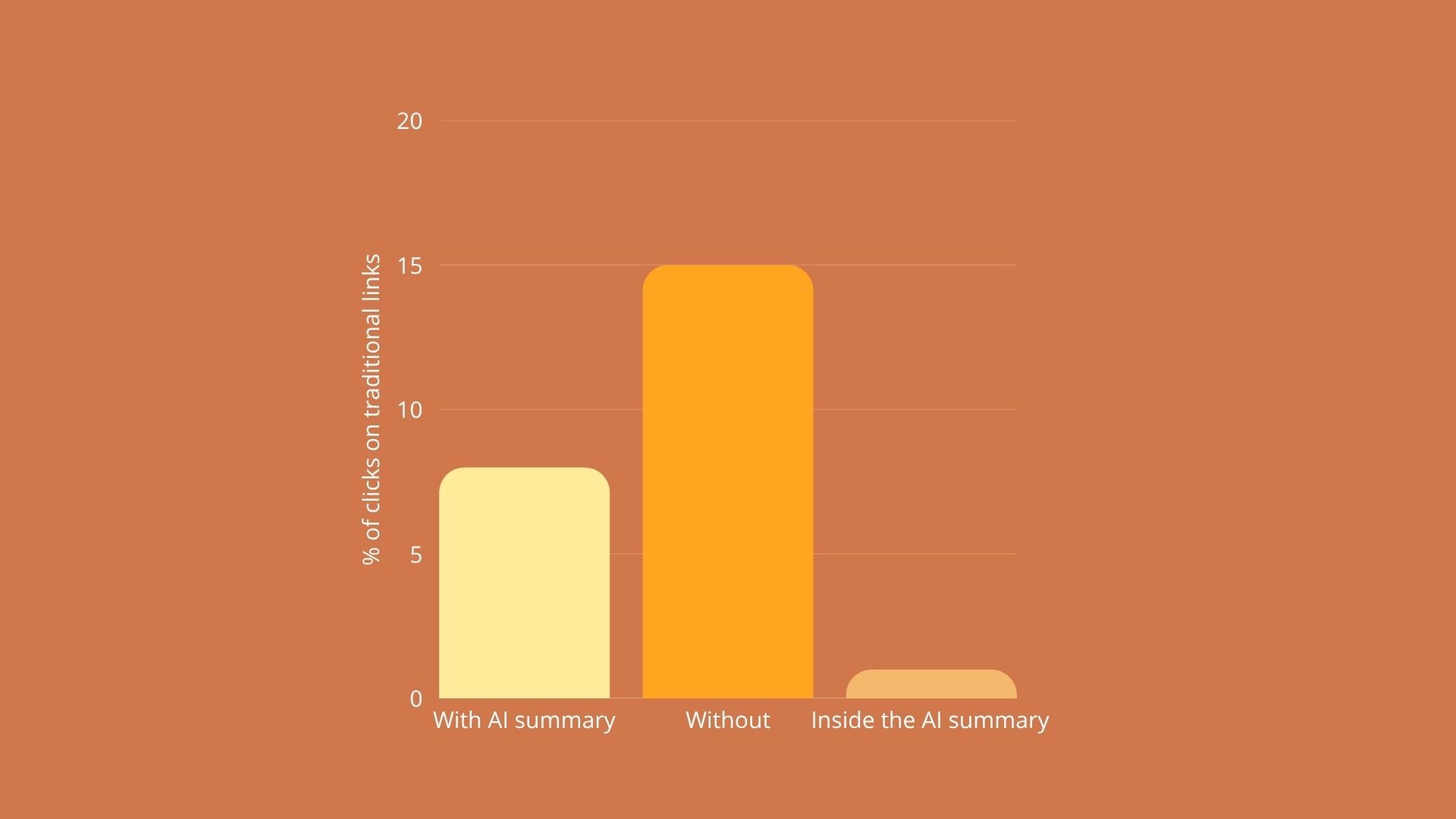
Based on one large sample, Pew Research determined that users clicked a traditional link in 8% of visits when an AI summary was present, versus 15% when it wasn’t. Only about 1% clicked a link inside the summary.
This means that being on page one and getting no clicks is now a normal outcome. The win has quietly moved from ranking to being the site that the box quotes.
None of this means SEO is dead; it simply means the goalposts moved. The page that used to win a click now wins a citation, and that citation is what puts your name in front of the searcher (whether they click or not).
The queries actually trigger AI Overviews
Not every search gets an AI Overview. The box loves questions and specificity, but it mostly ignores short, ambiguous head terms.
Longer, question-shaped queries trigger it far more often than one- or two-word searches. That maps to how people actually talk to search now, which is in full sentences. The intent mix is also broadening…
Thanks to the same Semrush study cited above, we now know that informational queries made up 91.3% of AI Overviews at the start of 2025 and fell to 57.1% by October, while commercial queries picked up the slack.
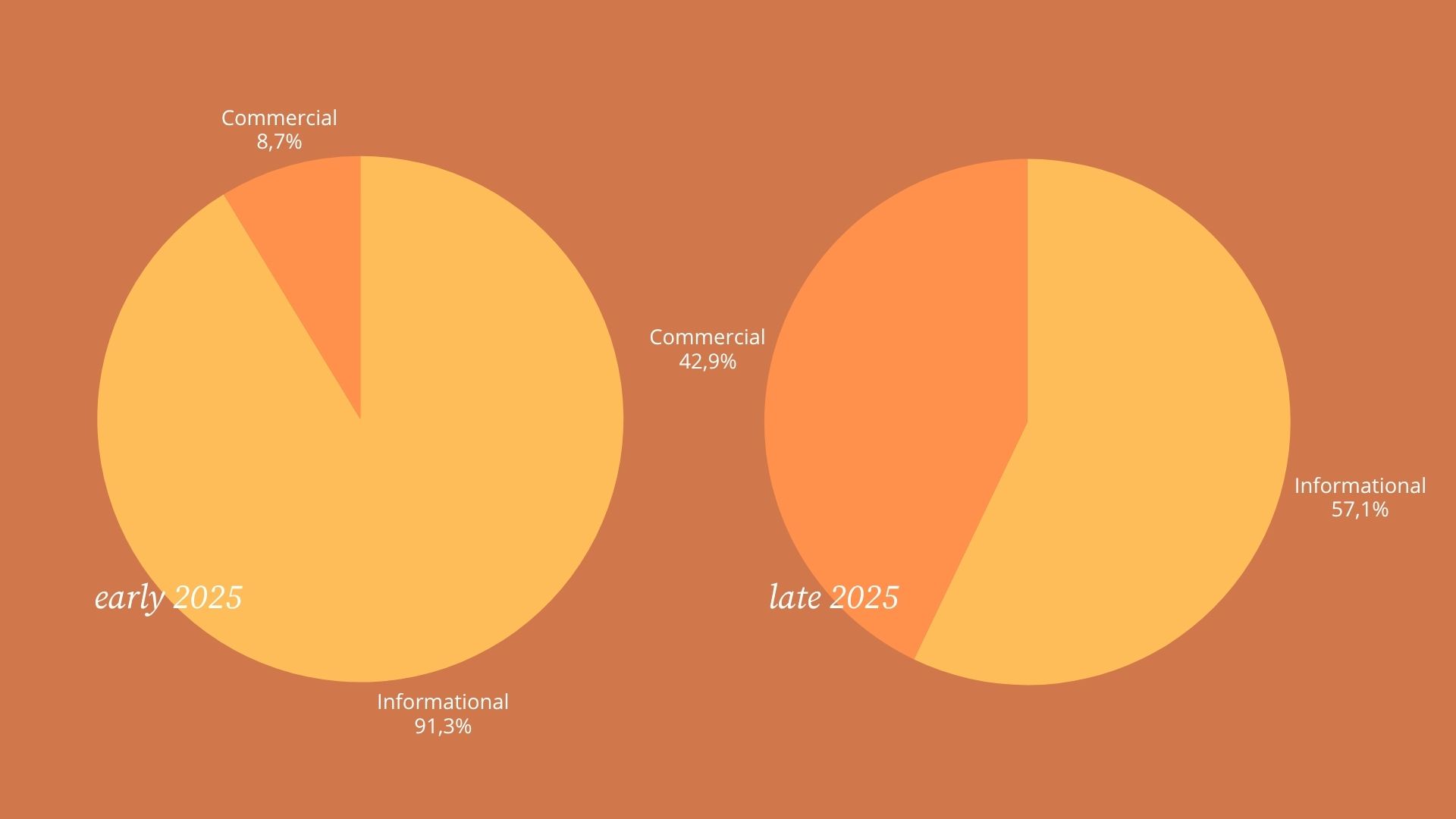
The logical conclusion? The box is creeping into buying-stage searches, not just how-to stuff. This means that, before optimizing anything, you should sort your target queries. Here’s some valuable advice:
- Chase the specific, question-based queries where you can give a genuinely better answer
- Deprioritize broad head terms where the box rarely fires
- Accept that some sensitive topics get thin or no AI Overview at all
One more thing worth knowing: pure navigation and brand searches rarely trigger the box, so don’t spend AIO effort there. Save it for the informational and commercial questions where the summary actually shows up and a strong answer can win the citation.
How I get pages cited in 8 steps
This is the part you came for. My eight steps to get a page cited, in the order I actually run them:
Step 1: rank on page one first
If you take one thing from this guide, take this. The box builds its answer from pages that already rank, so your first job is boring, old-fashioned ranking.
That means the fundamentals still decide everything. Match the query, cover it well, earn links and keep the page fast and crawlable.
I’ve watched teams skip this and go straight to “AIO optimization,” which is generally a mistake. You cannot optimize your way into a pool you’re not in. Get the page ranking, then worry about the box.
None of this is glamorous. It’s technical health, real content depth and links from pages that actually matter.
Step 2: pick queries the box actually answers
Target queries that are shaped like questions and specific enough to have a real answer. This is where a lot of the easy wins hide.
The pattern is clear in the data. According to a Neil Patel study, AI Overviews appeared on 36.1% of six- to ten-word queries but only 12.4% of one- to two-word queries (roughly triple the rate):
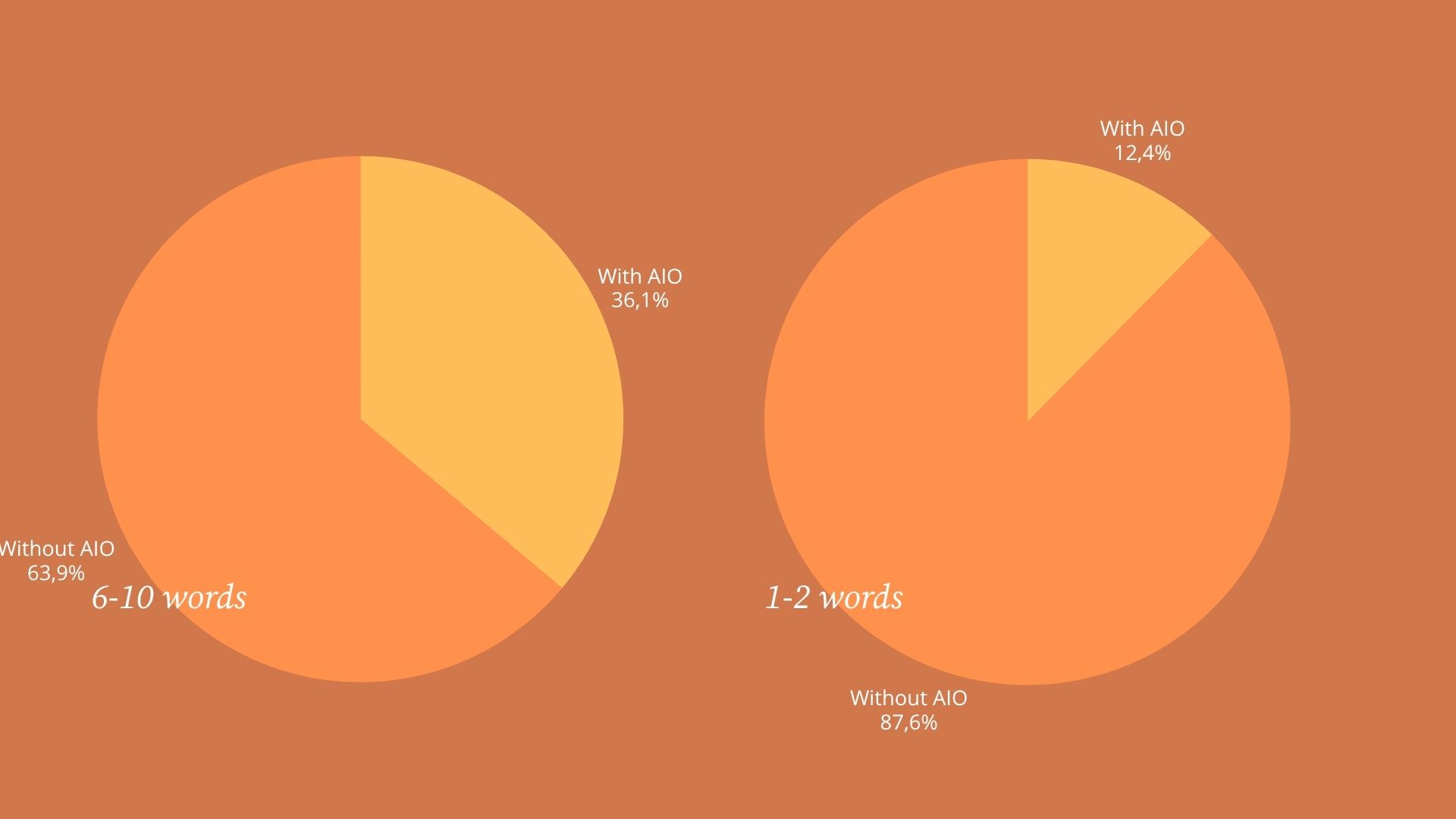
The bottom line? Forget about keywords and start writing the way people make questions. “How do I fix the battery on a Mac” beats “Mac battery fix.” The longer, clearer query is where the box lives.
Finding the best queries, however, is not a guessing game. You should pull them from Google’s Search Console, sales calls, People Also Ask boxes, and so forth. Each genuine question is a query the box might answer with your page.
Step 3: answer the question in the first two lines
The first two sentences under your heading should answer the question directly, in plain language and with no throat-clearing. But why?
Well, the model is scanning for a clean, liftable passage. If your answer is buried in paragraph four behind a personal story, it gets skipped for a competitor who answered the query in the first two sentences.
Start with one short declarative sentence that would make sense even if someone pasted it on its own, then expand below it. This is the single highest-return edit I make on existing pages. For example:
If the query is “how to reset a router”, the winning answer opens with the reset steps in the first two lines, not a history of your internet provider. You should clearly solve the query before focusing on any additional context.
Step 4: structure the page so a model can lift it
Having a well-structured page is important because it makes your content more extractable. The model reads your page in chunks and scores each chunk against the query. A wall of text is one messy chunk, but a tight section under a clear question is an easy quote.
In my playbook, I write for extraction by:
- Using short paragraphs (one idea each)
- Adding lists (but only if it makes sense)
- Formatting H2s and H3s as questions that mirror how people search
- Bolding the most important terms
- Breaking long how-to sections into numbered steps
- Using tables for comparisons
I aim for a page that someone could skim in ten seconds and still get the gist. If a section runs long, I split it. If a heading is vague, I rewrite it as the question it answers. Every formatting choice is really a question of whether a machine can find your answer fast.
Step 5: build trust with E-E-A-T and brand mentions
Google has to trust the source before it quotes it, and trust is built off your page as much as on it. This is the step most guides underrate.
On the page, put a real author with a real bio and real credentials to show experience, not just information. Think about what a skeptical editor would need before citing you. Using Google’s E-E-A-T framework (Experience, Expertise, Authoritativeness and Trustworthiness) as a guideline is always advisable.
Off the page, get your brand mentioned across the sites and “best of” lists your buyers already read. Those mentions are one of the strongest signals that you’re a real, citable entity. This is genuinely hard to do by hand, which is where a tool earns its keep.
The CrowdReply Backlinks Marketplace feature, for example, was designed to address this specific need. It helps you build the right mentions and editorial links without the hassle of finding available backlinks, sourcing from a catalog of over 40,000 publishers.
Step 6: add schema that helps, but don’t get lost in the process
Article, FAQ and HowTo schema matter because they allow Google to understand your page, but that’s pretty much the whole purpose. If you’re adding schema to improve your ranking, you’re most likely wasting your time.
Google’s guide on how AI features work in Google Search clearly states this:
“You don’t need to create new machine readable files, AI text files, or markup to appear in these features. There’s also no special schema.org structured data that you need to add.”
Why not skip step number six? Well, marking up your pages properly is still good practice, so you should definitely do it. Just don’t expect schema tags to help you rank higher on Google.
Step 7: cover the fan-out, not just the head question
Google does not answer your query with your query. It quietly expands one search into a fan of related sub-questions, then assembles the answer from whatever covers them. That’s why fan-out (the “number of inputs that can be connected to a specific output”) matters.
Think of fan-out as the additional context that should be added after the initial two sentences. If the query is “how to rank in AI Overviews,” the fan-out includes what triggers them, how long it takes and whether ranking guarantees it.
A page that answers the head question and its follow-ups gives the box more reasons to reach for you. In practice, this looks like topic clusters. One thorough page plus tight supporting pages on each sub-question. The goal is breadth of coverage, not padded word count.
You can see the fan-out in the box itself. Search your main query, read which sub-topics the summary touches, then make sure your cluster covers each one. That reverse engineering beats guessing at what Google will expand into.
Step 8: measure, then iterate
When it comes to AI search optimization, one-time edits won’t get you very far. To actually know what’s working, you need to constantly measure visibility. I run a simple loop that never lets me down:
- Baseline the live box for your target query and note who it cites
- Make one change (and only one change at a time)
- Request re-indexing in Search Console
- Re-check the box a few days later and see if anything moved
Why only one change at a time? Well, if you rewrite the intro, fix the schema and add three links all at once, you learn nothing about which move mattered. To know what really works, you need to isolate the variable.
If all of this sounds like an overwhelming amount of work, I have good news for you. Features such as CrowdReply’s Google AI Overview Tracker watch whether AI answers cite you. You’re measuring the trend instead of refreshing a tab, which is a huge timesaver.
Regardless of the tool, the playbook remains the same: change one thing, watch what the box does and keep what works.
Why ranking is necessary but not a guarantee
You need to rank well to be eligible, but being eligible doesn’t guarantee a spot in the box. The ranking is the baseline, not the end game, and this fact is backed by actual data.
The correlation between ranking and AIO citations
Your site currently ranks as one of the top 10 results for a given query, so it should be easy to get cited, right? Well, not really. While ranking plays a part, the correlation between ranking and getting cited is surprisingly weak.
This was made clear by a July 2025 Ahrefs study that found a correlation of just 0.347 between ranking in the top 10 and landing a spot in the box. Surprisingly enough, the number sits closer to -1.0 (meaning ranking well will never get you cited) than +1.0 (meaning ranking well will always get you cited).
A follow-up Ahrefs study published in March 2026 determined that the share of AI Overviews coming from top-10 pages fell from 76% in mid-2025 to 38% by early 2026. The bottom line? The already-frail relationship between ranking and AIO citations is only weakening over time…
Answers are less stable than rankings
Here’s another reason why being Google’s blue link number one is not enough to rank in AIO: when you enter a query and refresh the page, the top-10 results tend to be the same. However, the sources cited by the box change constantly.
Appearing once in AIO doesn’t mean you’ll always be there. Every check should be treated as a single sample, not a verdict. If you got dropped today, look at the trend over a couple of weeks before you rewrite the whole page.
The AIO “hacks” you should stop wasting time on
I’ve covered what you should do to rank in AI Overviews in eight simple steps, but it’s equally important to know what you shouldn’t do. Since AIO “hacks” are everywhere on the web, it’s easy to get lost in the noise. Hopefully, this clarifies things:
- Stop treating schema as a cheat code. It helps comprehension and nothing more, and no tag ranks you in the box.
- Drop the obsession with word count. A tight page that answers the question beats a bloated one that buries it, and padding for length actively hurts extraction. This is one of the main differences between search and answer engine optimization.
- Stop rewriting your pages “for the AI.” The content that wins the box is the content that would win a real reader.
- Stop expecting results from building an llms.txt file. It’s a proposed standard that the practitioners I trust still treat as speculative, and there’s no evidence it moves AI Overview citations. Right now, it’s nothing but a buzzword.
A brief note on clicks and alternative AI engines
When you step back, the strategy gets simpler, not harder. If clicks fall when the box appears, then chasing raw click volume is the wrong scoreboard. Being the cited, trusted source is the new one.
That reframes the goal. You want to be the answer, and you want the visits you do earn to be higher intent because the reader already got the basics from the box and clicked through anyway.
This is why I stopped reporting on clicks alone. A page can lose click-through and still be winning if it’s the source the box quotes to thousands of people who never needed to click. Measure presence, not just traffic.
It’s also crucial not to stop at Google. Thanks to Ahrefs, we now know that only about 12% of URLs cited by ChatGPT, Gemini and Copilot even rank in Google’s top 10 for the same prompt. From ChatGPT to Perplexity, each tool cites differently, and that adds yet another layer of complexity to the process.
Your next move:
Ranking in AI Overviews is mostly earning eligibility and then measuring. There’s no secret switch, which is either disappointing or freeing depending on how much you were hoping for a shortcut. So, how do you even start?
Here’s the move I’d make this week:
- Pick one page that already ranks on page one for a question you care about
- Front-load its answer into the first two lines
- Clean up the structure
- Watch whether the box starts citing it
If you’re ever tired of refreshing tabs, tools such as CrowdReply can help you track your AI visibility and quickly identify what’s working.
Frequently asked questions
What percentage of searches trigger an AI Overview?
Roughly 15% of Google queries trigger an AI Overview as of late 2025. That’s up from about 6.5% at the start of the year and down from a mid-year peak near 25%.
How long does it take to rank in AI Overviews?
Usually about as long as it takes Google to re-crawl and re-index your change, which is often a few days.
Does ranking #1 guarantee appearing in AI Overviews?
No. Even pages ranking first are cited only about half the time. Ranking makes you eligible to be quoted; it does not make you the pick, and the box pulls from a wider pool than just the top result.
What schema markup helps AI Overview rankings?
Article, FAQ and HowTo schema help Google understand your page, which is worth doing on its own merits, but there’s no special structured data that buys you into the box. No schema markup ranks you in AI Overviews.
How do I track whether I’m appearing in AI Overviews?
Check the live box for your target queries on a schedule and use an AI-visibility tracker to measure the trend instead of eyeballing it.
Can paid ads help with AI Overviews?
No. AI Overview citations are organic. Ads run on a separate track and don’t buy you a spot inside the box, so this is purely an SEO and content problem.
Are AI Overview citations the same as organic rankings?
No. They overlap, but citations are a separate and less stable layer that draws from a wider pool of pages.